In the world of device protection, two common terms often come up: warranty and insurance. Both options offer coverage, but they serve different purposes and provide different types of protection. Choosing between warranty and insurance for your smartphone, tablet, or laptop can be confusing if you’re not sure what each entails. In this post, we’ll break down the key differences between warranty and insurance, so you can make an informed decision about what’s best for you.
What is a Warranty?
A warranty is a promise made by the manufacturer or provider to repair or replace a device if it fails due to a defect or malfunction within a specific period. Warranties are typically included when you purchase a new device and are often limited to manufacturing issues, meaning they don’t cover accidental damage or theft.
Key Features of a Warranty:
- Covers Manufacturing Defects: Warranties cover repairs or replacements for issues caused by faulty parts or manufacturing errors.
- Limited Timeframe: Most warranties last between 1 to 3 years, depending on the provider or plan.
- Doesn’t Cover Accidents or Theft: Warranties don’t cover accidental drops, spills, or theft – they only apply to problems that stem from the device itself.
What is Insurance?
Insurance, on the other hand, is a type of protection plan that covers a wide range of risks, including accidental damage, loss, or theft. Unlike warranties, insurance isn’t limited to manufacturing defects. It’s a separate plan that you purchase in addition to the device and often includes premiums and deductibles.
Key Features of Insurance:
- Covers Accidents and Theft: Insurance covers accidental damage like screen cracks, water damage, and even theft, depending on the policy.
- Renewable Plans: Insurance plans can often be renewed annually, giving you continued coverage as long as you pay the premium.
- May Include Deductibles: Insurance policies may require you to pay a deductible for each claim, depending on the extent of the damage.
Comparing Warranty and Insurance: Which One is Right for You?
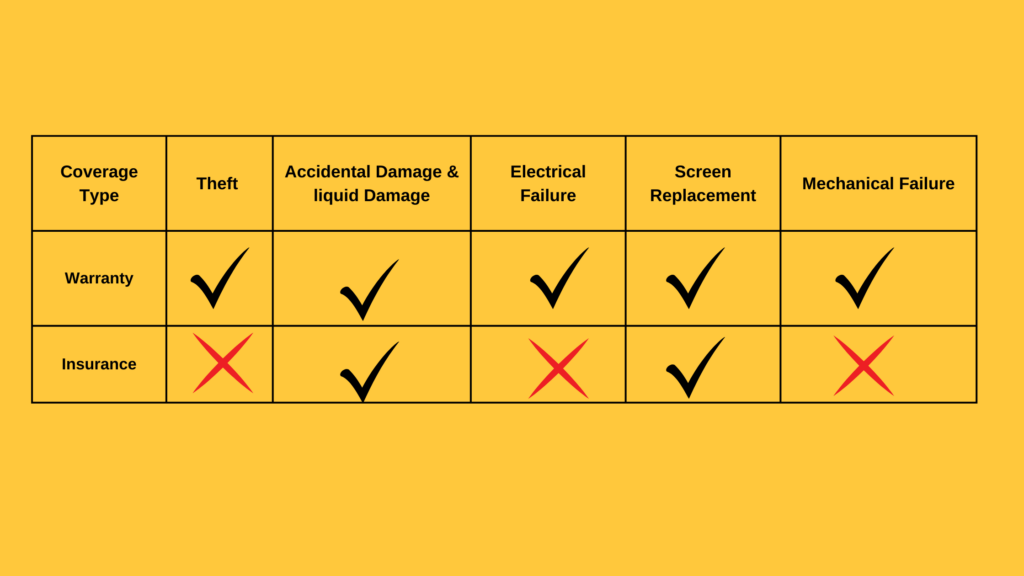
When deciding between warranty and insurance, think about how you use your device and the risks it’s exposed to.
- For Low-Risk Users: If you use your device in a safe environment, don’t travel often, and prioritize protection from internal defects, a warranty may be sufficient.
- For High-Risk Users: If you’re always on the go, or your device faces higher chances of accidental damage or theft, insurance may be the better choice.
- Comprehensive Coverage: Some users opt for both a warranty and insurance, especially if the device is valuable. This provides all-around protection against defects, accidents, and theft.
Why Choose EWPS for Your Device Protection?
At EWPS, we offer extended warranty plans and comprehensive device protection for a wide range of electronic devices. With our plans, you get the benefits of a warranty to cover device malfunctions, and insurance-like coverage for accidental damage, water damage, and theft. EWPS aims to provide peace of mind with flexible plans tailored to your needs.
Frequently Asked Questions
- Can I have both a warranty and insurance for my device?
- Yes, many people choose to have both to ensure they’re fully covered.
- Does insurance cover every type of damage?
- Insurance typically covers accidental damage and theft, but coverage details vary depending on the plan.
- Is extended warranty worth it?
- An extended warranty provides added peace of mind, especially for high-end devices or devices used in professional settings.
Protect Your Device with EWPS
Whether you’re interested in an extended warranty or looking for comprehensive protection, EWPS has you covered. Our plans are designed to protect your devices from a variety of risks, providing both financial and emotional security. Explore our options and choose the plan that’s right for you.